
Most expats spend between $1,200 and $2,500 per month.
A single person can live for less in smaller towns or inland cities. Beach towns, imported goods, private healthcare and frequent restaurants push the budget up quickly.
Simple lifestyle, modest rent, fewer imported goods.
Better housing, more eating out, private insurance options.
Beachfront rent, frequent restaurants, private transport.
What does a typical month cost in the Dominican Republic?
These are planning ranges, not fixed prices. Your biggest variable will usually be rent. Where you land in these ranges depends almost entirely on the region you choose and the habits you bring with you.
| Category | Budget | Comfortable | Premium |
|---|---|---|---|
| Rent | $400 to $700 | $800 to $1,400 | $1,800+ |
| Food | $250 to $350 | $400 to $650 | $800+ |
| Utilities | $80 to $150 | $150 to $250 | $300+ |
| Internet and phone | $40 to $70 | $70 to $120 | $150+ |
| Transport | $80 to $180 | $200 to $400 | $500+ |
| Healthcare | $50 to $150 | $150 to $350 | $500+ |
Rent
The single biggest variable. A basic furnished studio in a smaller town runs $400 to $600. A modern one-bedroom in Cabarete or Las Terrenas runs $800 to $1,400. Punta Cana starts around $1,000 to $1,500 for quality apartments. Long-term leases (6 months or more) are significantly cheaper than short-term furnished rentals. Always negotiate for long-term rates.
Food
Local markets and Dominican restaurants are cheap. A full meal at a local comedor costs $3 to $6 USD. Cooking with local produce is very affordable. The cost jumps significantly if you shop at imported food stores, buy foreign brands or eat at expat-facing restaurants regularly. Your food budget can double or halve based on this one habit.
Utilities
Electricity is expensive relative to other costs and unreliable in many areas. Power cuts are a reality across most of the DR. If your building does not have a generator or inverter backup, you may need your own. Budget for both your electricity bill and the cost of backup power, whether that is a UPS, inverter system or generator fuel. Air conditioning drives costs up significantly in hot months.
Internet and phone
Fibre broadband is available in many areas and runs $40 to $80 per month for decent speeds. Claro and Altice are the main providers. Fibre quality varies significantly by neighbourhood even within the same town. A local SIM with a data plan costs $15 to $30 per month. Budget expats often use mobile data as their primary connection, which works in well-covered areas but can be unreliable.
Transport
Public transport (guaguas, motoconchos, carros públicos) is very cheap. A short motoconcho ride costs less than $1. Uber and InDrive work well in Santo Domingo and Santiago. In beach towns and smaller areas, you will likely need a scooter or car. Owning a car adds insurance ($50 to $120/month), fuel (gasoline is roughly $1.20 per litre) and maintenance. A scooter is cheaper to run but less practical for families.
Healthcare
Quality private healthcare is available in the main cities and increasingly in popular expat areas. A GP visit at a private clinic costs $40 to $80 USD. Private health insurance runs $80 to $300 per month depending on age, coverage level and provider. Public healthcare exists but is not recommended for expats as primary care. Most expats use private insurance plus out-of-pocket for smaller visits. International health insurance (like Safety Wing or Cigna) is another option.
How does where you live in the DR change your monthly budget?
The same lifestyle costs very different amounts depending on the region. The gap between the most expensive expat beach zones and quieter inland areas can easily be $700 to $1,000 per month on rent alone.

Beach towns
Cabarete, Las Terrenas and Punta Cana are the most expensive areas for expats. Rent for a modern one-bedroom runs $900 to $1,600 in prime locations. Restaurants, groceries and services price around the foreign resident and tourist market. The tradeoff is lifestyle, community and the beach on your doorstep.

Cities
Santo Domingo and Santiago offer the best combination of services, healthcare, shopping and infrastructure. Costs vary enormously by neighbourhood. Upscale areas like Piantini or La Esperilla in Santo Domingo cost similarly to beach towns. Mid-range neighbourhoods are noticeably cheaper with better everyday convenience.

Mountain and inland towns
Jarabacoa offers a cooler climate, lower rents ($400 to $700 for a decent apartment) and a slower pace. It suits retirees and those who do not need beach access daily. Local food is cheap. The tradeoff is limited expat infrastructure, fewer healthcare options and being farther from the airport.

Off-the-radar areas
Las Galeras, Barahona and smaller coastal villages offer the lowest costs in the country. A basic but comfortable lifestyle is achievable for $800 to $1,100 per month. Internet can be inconsistent, healthcare requires travel to the nearest city, and the expat community is thin. Best suited for those who genuinely want to go local.
Resort zones
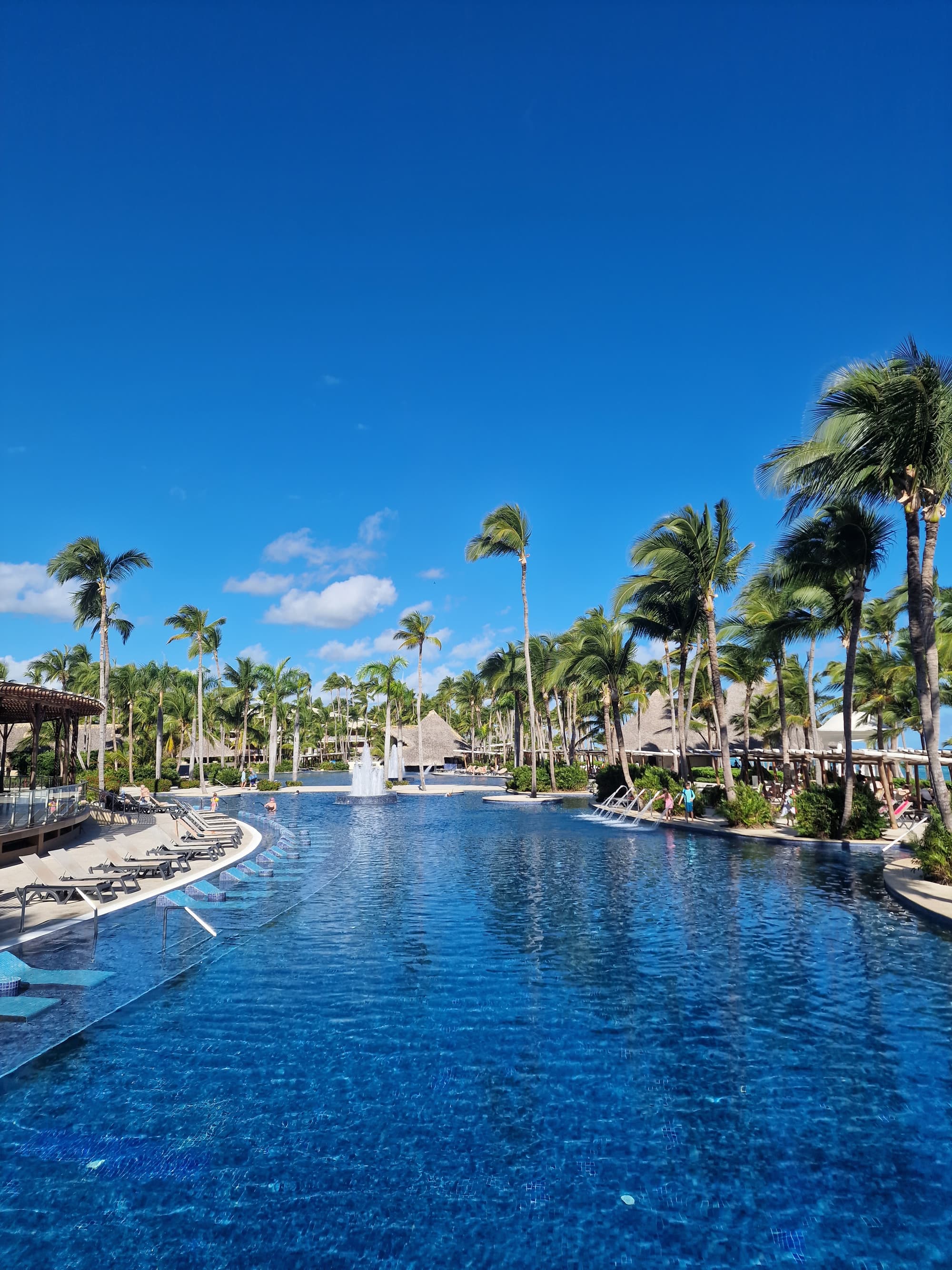
Punta Cana and the resort corridor are the priciest areas to live in the DR as a non-tourist. Short-term rentals here are extremely expensive. Long-term rentals in gated communities run $1,200 to $2,500 for quality units. The upside is strong infrastructure, consistent power and proximity to the international airport.

Mid-tier towns
Puerto Plata, Sosúa and La Romana offer a middle ground: more affordable than the top expat zones, with reasonable infrastructure and some established expat presence. Rent for a comfortable apartment runs $500 to $900. These areas suit people who want value without going fully off-grid.
Which parts of the Dominican Republic offer the best value by lifestyle?
| Lifestyle | Best value areas | Why |
|---|---|---|
| Remote worker | Cabarete, Santiago | Better balance of internet, community and cost |
| Retiree | Las Terrenas, Jarabacoa | Slower pace with livability and community |
| Urban life | Santo Domingo, Santiago | Services, hospitals and shopping nearby |
| Beach lifestyle | Cabarete, Las Galeras | More character and value than resort zones |
How does the Dominican Republic compare to other popular expat destinations on cost?
How does living in the DR compare with other popular destinations for US and Canadian expats? Figures are estimates for a comfortable single-person lifestyle in a mid-range area.
| Country | Monthly budget | Rent (1-bed) | Internet | Healthcare |
|---|---|---|---|---|
| Dominican Republic | $1,200 to $2,000 | $600 to $1,200 | $40 to $80/mo | Good in key regions |
| Mexico (Merida/Oaxaca) | $1,100 to $1,800 | $500 to $1,000 | $30 to $60/mo | Good in cities |
| Colombia (Medellin) | $900 to $1,500 | $400 to $800 | $25 to $50/mo | Good private system |
| Costa Rica | $1,500 to $2,500 | $700 to $1,400 | $40 to $70/mo | Good |
| Panama (Panama City) | $1,500 to $2,500 | $800 to $1,600 | $40 to $80/mo | Excellent |
| Portugal (Lisbon area) | $2,000 to $3,200 | $1,200 to $2,000 | $30 to $50/mo | Excellent |
| Thailand (Chiang Mai) | $800 to $1,400 | $300 to $700 | $15 to $30/mo | Good private |
The DR sits at the mid-range for Latin America on cost, but offers advantages that cheaper alternatives do not: proximity to the US (2 to 4 hour flights), no time zone adjustment for remote work, a Caribbean lifestyle, and a relatively straightforward residency route.
Common cost questions
Can you live in the DR on $1,000 a month?
Yes, but it requires genuine lifestyle adjustments. At $1,000 per month you need to be in one of the cheaper regions (Jarabacoa, Las Galeras or Barahona), renting locally rather than in expat-facing buildings, eating predominantly local food and avoiding imported goods. It is a simple life, not a comfortable expat lifestyle, but it is doable and people do it. The number most honest expats give for a basic but decent life is $1,200 to $1,400 per month.
What is the cheapest place to live in the Dominican Republic?
Las Galeras and Barahona are the most affordable coastal areas. Jarabacoa is the cheapest mountain option. Rent in these areas runs $350 to $650 for a decent apartment. Local food is cheap. The tradeoffs are limited expat community, less consistent internet, fewer healthcare options and in most cases a longer drive to an international airport. These areas suit people who want a simple, slow-paced DR life rather than a fully-serviced expat lifestyle.
How much is rent in the Dominican Republic?
Rent spans a wide range. A basic furnished studio in a smaller town runs $350 to $600 per month. A modern one-bedroom in Cabarete or Las Terrenas runs $800 to $1,400 depending on location and quality. In Santo Domingo or Santiago, a good one-bedroom in a mid-range neighbourhood costs $600 to $1,100. Punta Cana and resort corridor apartments start around $1,000 to $1,800 for quality furnished units. Long-term lease rates are always significantly lower than short-stay rates. Always negotiate for 6-month or 12-month terms.
Is the Dominican Republic cheaper than Mexico or Colombia?
Broadly comparable to mid-range Mexican cities like Merida, and slightly more expensive than Medellin, Colombia. The DR's main cost advantages are rent in non-premium areas, local food and local services. Where the DR loses ground is imported goods, electricity costs and some healthcare expenses. The DR's main non-financial advantages over both are: it is 2 to 4 hours from the US east coast, operates in the same or similar time zones, uses USD widely and is easier for US and Canadian residency applicants to navigate.
Do prices in the DR change with the exchange rate?
Partially. Rent is often quoted in USD, which insulates you from peso fluctuations. Day-to-day spending in pesos at local markets, restaurants and taxis means your effective peso-denominated costs shift when the exchange rate moves. The Dominican peso has depreciated steadily against the USD over time, which has generally been good for dollar earners living in the DR. Tracking the rate weekly matters when budgeting month to month.
Is it cheaper to live in the DR as a couple or single?
Couples benefit significantly from shared fixed costs. A couple sharing a one-bedroom apartment in a mid-range area can often live comfortably for $1,800 to $2,500 combined, which is $900 to $1,250 per person. Rent, utilities and transport costs are split, while food costs roughly double from a single person's budget. For two people, the DR becomes noticeably better value than living solo.
What about healthcare costs?
Private healthcare in the DR is considerably cheaper than in the US but not as cheap as some other Latin American countries. A GP visit at a reputable private clinic costs $40 to $80 USD. Dental work is affordable, often 50 to 70% cheaper than US prices. Private health insurance runs $80 to $300 per month depending on age and coverage. A hospitalisation without insurance can run $500 to $5,000 USD. Good private health insurance is strongly recommended for all expats living in the DR.